Screens
Ink, paper and gold
KenjiThe Novice

MikaThe Apprentice

DaikiThe Retainer

SoraThe Master

HanaThe Grandmaster
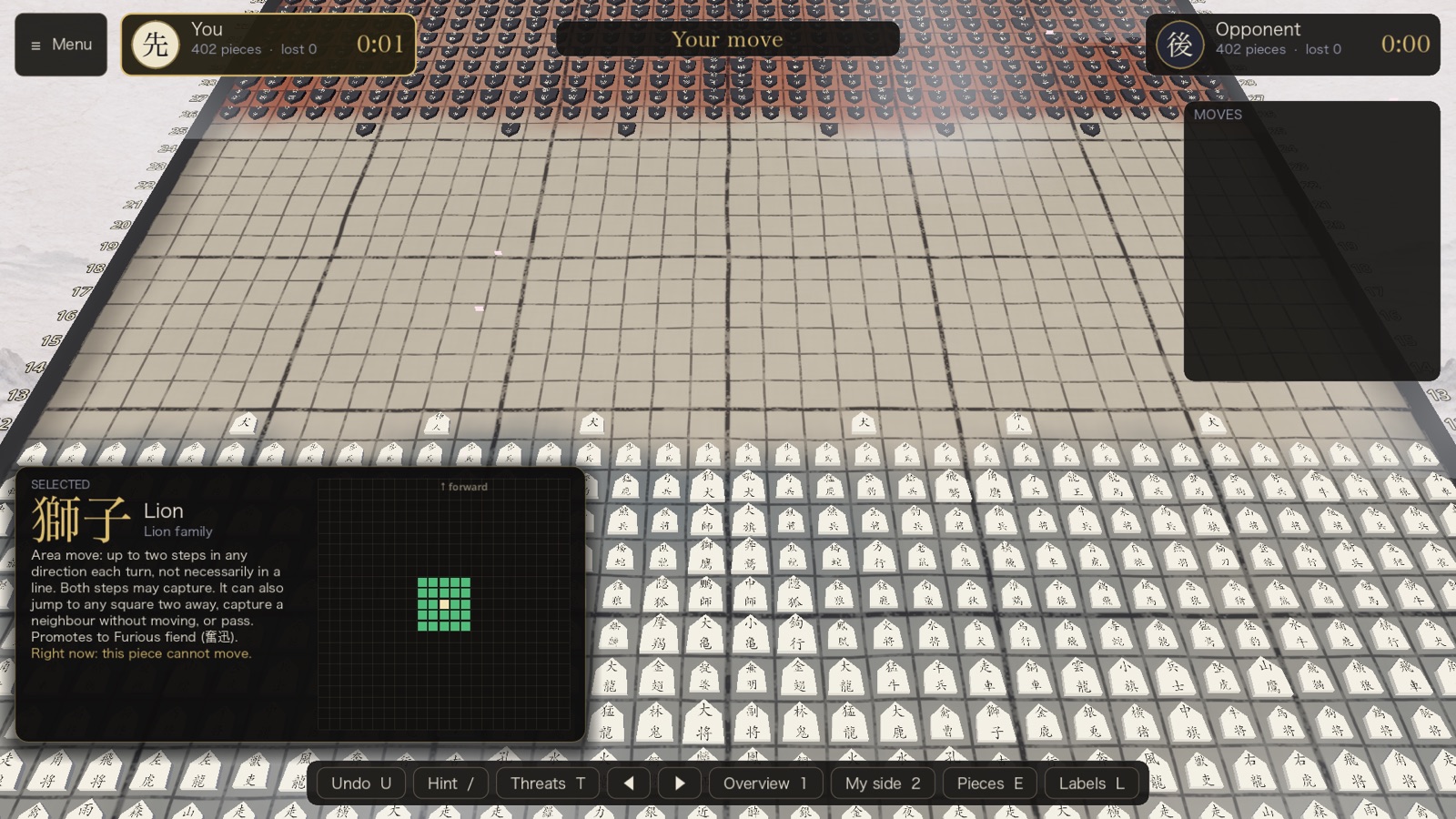
The ultimate game. 36 × 36 squares. 402 pieces a side. Rebuilt in 3D, in ink and gold.
Limited beta · macOS · Windows · Linux
Taikyoku shogi (“ultimate shogi”) is a centuries-old variant played on a board of 1,296 squares. Each side commands 402 wedge-shaped pieces. Almost every kind of piece moves in its own way. It was almost lost to history, and this is a playable version of it.
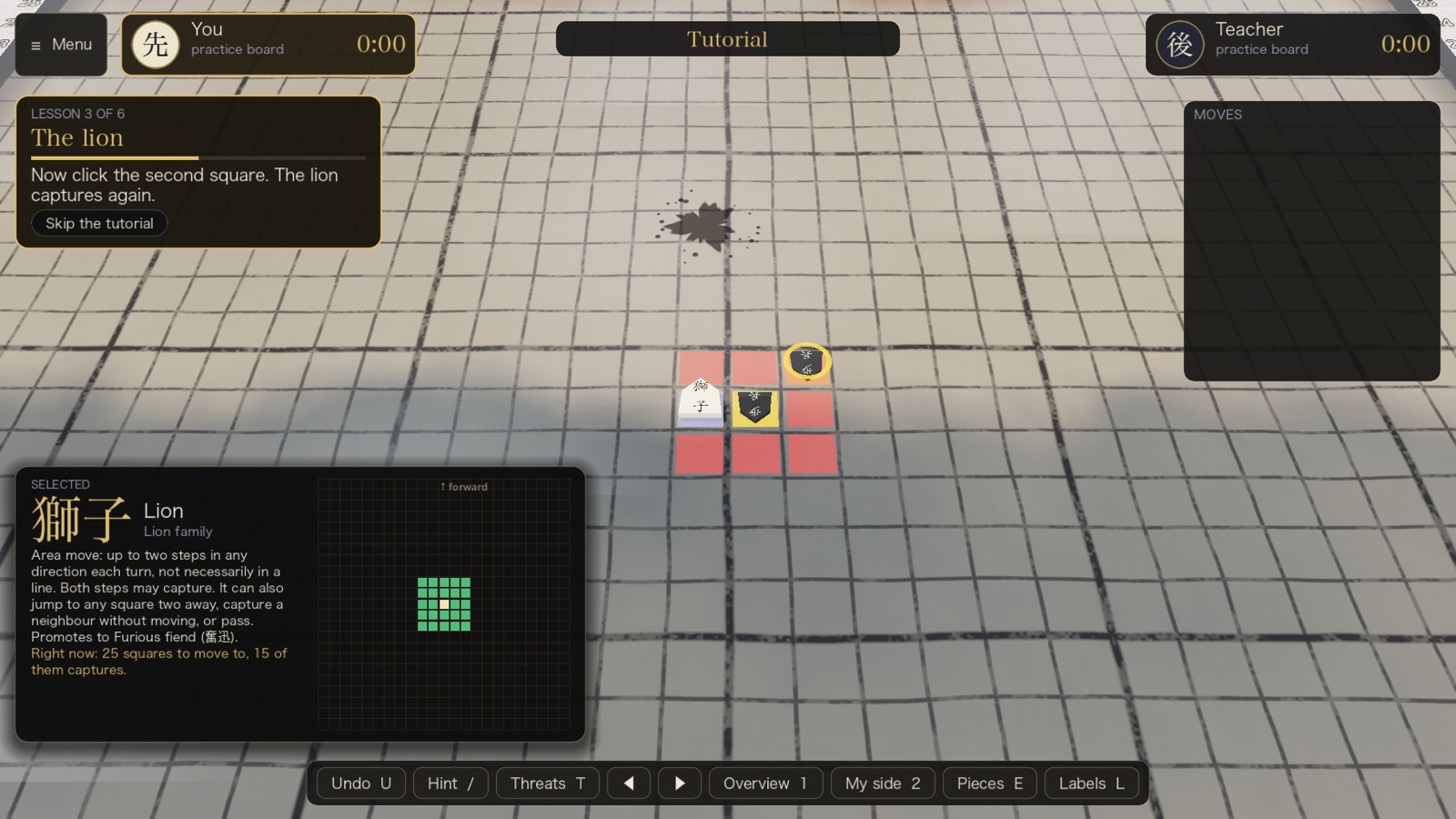
Six short lessons on tiny practice boards: moving, capturing, the lion, promotion, protecting your king and winning. A teacher’s voice and always-on captions guide you.
Climb from Kenji, who is still learning, to Hana, the grandmaster. Each has a handicap, a personality and their own scene. Earn up to three stars on each.
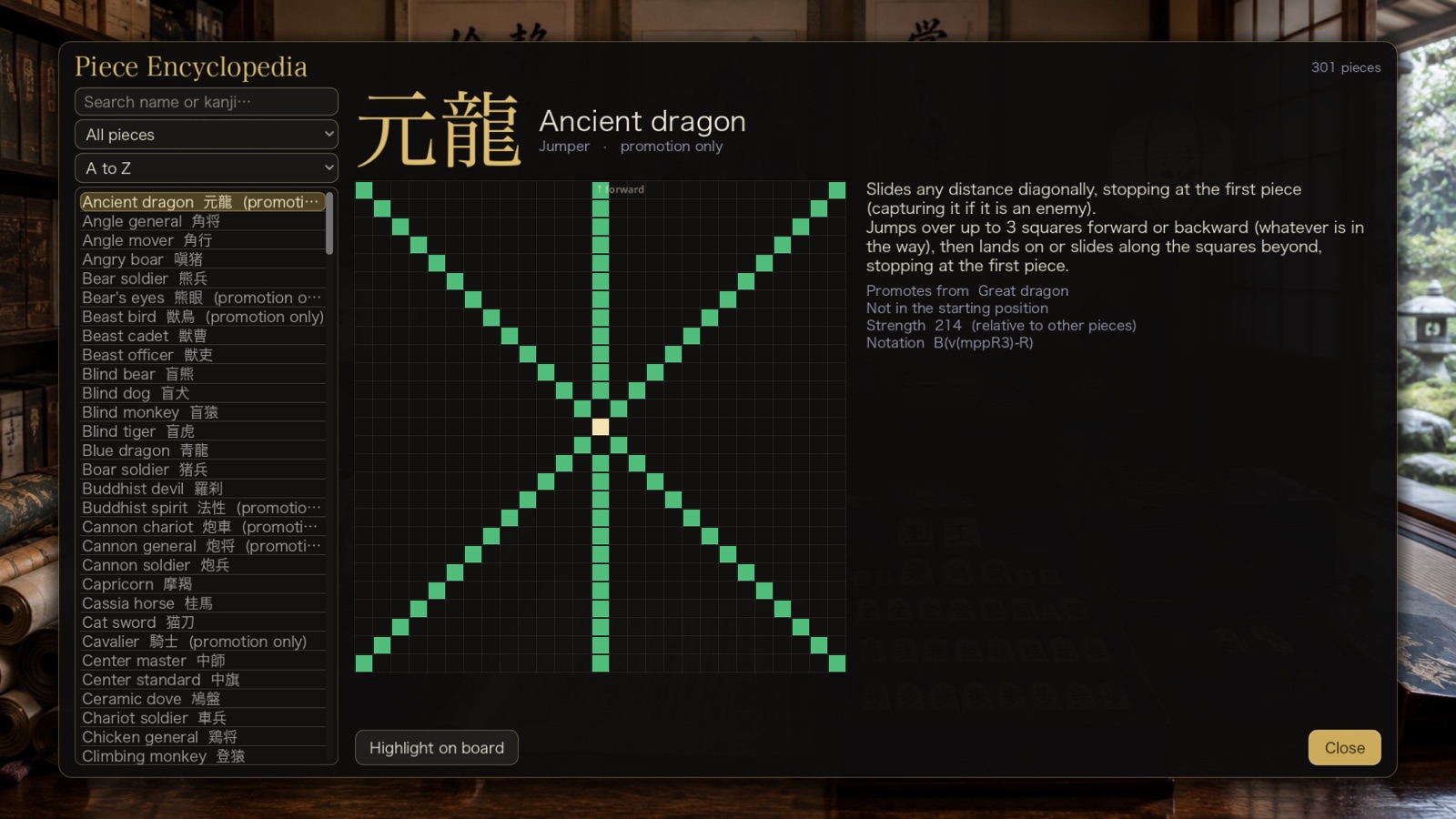
All 301 pieces with movement diagrams, plain-English descriptions and promotions. Hover any piece in play and its moves appear instantly.
Small positions with one winning idea. Find the move that wins, the lion capture that takes the most, or the forced win in two.
Watch the AI play itself at up to eight times speed. Step through any game, jump to any move, and copy a whole game to the clipboard to share.
Play the computer at three strengths, or pass the keyboard on one computer. The camera follows the move, with a calm cinematic mode.
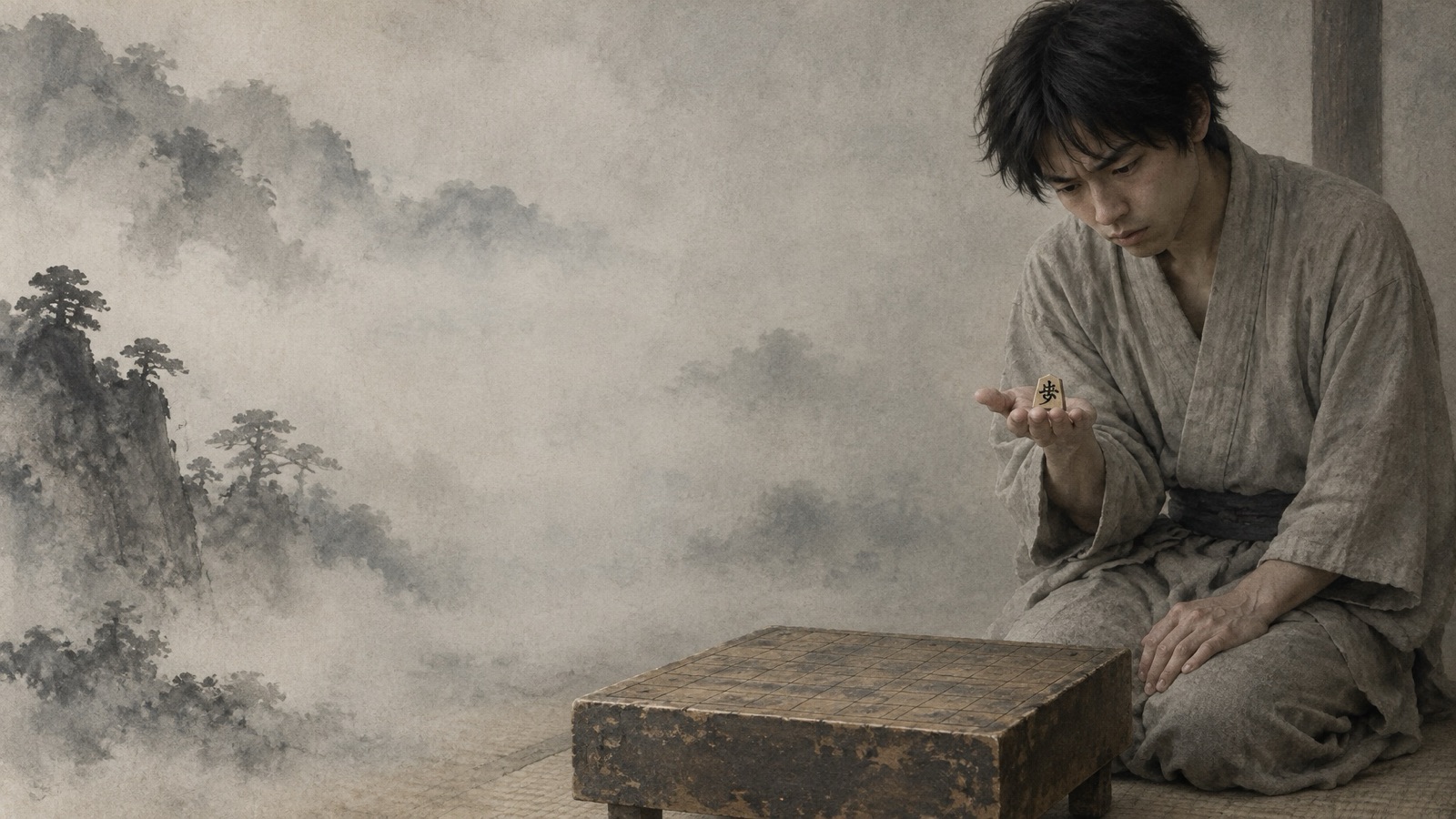
The game was created around the middle of the 16th or the 17th century, probably by priests, and grew out of earlier large-board shogi games. It is not known to have been widely played, and it was forgotten until it was rediscovered in 1997.
Only two sets of restored pieces exist. In 2004 a Japanese television show staged a real game: 3,805 moves over 32 hours and 41 minutes. The old documents disagree about some rules, so this version follows one careful reading and lets you change the promotion rule.
Sources: English Wikipedia, “Taikyoku shogi” (CC BY-SA 4.0); G. Hodges, Ten Shogi Variants (2002). The game includes a narrated history.

Taikyoku Shogi is in a limited beta. The core game, tutorial, ladder, puzzles and encyclopedia work, but you may hit bugs, odd AI moves or screens that change from one build to the next.
Saved games, statistics and settings from one beta build may stop working in a later one. Don’t rely on a long game surviving an update.
Rules for a few pieces are interpretations of uncertain sources, the computer opponent is still being tuned, and online play is not built yet. Everything here can change before a full release.
Found a problem or have an idea? Tell the person who invited you to the beta.
Limited beta, version 1.0.0. This is a test build, so expect rough edges. No account, no ads, and nothing is sent anywhere while you play.
Checksums are SHA-256: after downloading, compare with shasum -a 256 <file> (macOS, Linux) or Get-FileHash <file> (Windows). Needs about 300 MB of disk space and a graphics card from the last ten years.
It is an early version shared with a small group to find problems before a full release. It is playable, but it is not finished: bugs, unbalanced opponents and changes to saves or menus are expected. Your feedback is the point.
No. The tutorial teaches the basics, and you can switch the piece labels from kanji to English names at any time (press L). Hover any piece to see how it moves.
The one real recorded game took 32 hours. Yours will be shorter: the ladder opponents give you handicaps, and the AI plays quickly. You can pause and resume at any time, and the game autosaves.
They follow the surviving descriptions as compiled on Wikipedia, which disagree in places. Promotion in particular is uncertain, so you can choose among three rules. See the History chapter “Rules we are unsure of”.
Not yet. You can play the computer or another person on the same computer. Online play is planned.
The music (Suno), the teacher’s voice and sound effects (ElevenLabs) and the paintings (OpenArt) were produced with AI tools. The game design and code are by the author.
No. There are no accounts, analytics or network requests. Your saved game, settings and statistics stay on your computer.